Speech Timing Alterations in Parkinson’s Disease and Huntington’s Disease
Introduction to Speech Timing and Basal Ganglia Disorders
Speech production is a highly coordinated motor process that depends on accurate planning, initiation, rhythmic control, and execution of movements involving the lips, tongue, jaw, larynx, and respiratory muscles. Neurological disorders affecting the basal ganglia can significantly disrupt these mechanisms and lead to abnormalities in speech timing, articulation, fluency, and rhythm.
The basal ganglia are essential neural structures involved in motor coordination, movement regulation, timing precision, and automatic motor sequencing. Their dysfunction has been extensively associated with movement disorders such as Parkinson’s Disease and Huntington’s Disease. While many studies have investigated limb movement abnormalities in these diseases, speech motor control has received comparatively less attention despite its clinical importance.
Research on motor behavior in Parkinson’s disease has demonstrated several characteristic impairments, including reduced movement amplitude, impaired execution of rapid skilled actions, increased variability in reaction time, and deficits in predictive motor planning. Patients frequently show difficulty preparing and coordinating voluntary movements, suggesting abnormalities in central motor programming mechanisms. Electromyographic studies have also revealed altered coordination patterns during rapid movements, supporting the hypothesis that neural systems responsible for voluntary movement sequencing are disrupted in Parkinsonian syndromes.
In Huntington’s disease, motor impairments are often characterized by involuntary movements, hypotonia, slowed motor responses, reduced movement precision, and impaired reflex control. Although speech deficits in Huntington’s disease have historically received less scientific focus, patients commonly exhibit irregular speech rhythm, prolonged pauses, variable speaking rate, and unstable articulatory timing.
Unlike novel limb tasks that require conscious motor learning, speech production is considered an overlearned automatic motor activity. This distinction is important because basal ganglia disorders may affect speech differently than voluntary limb movements. In speech disorders associated with Parkinson’s and Huntington’s diseases, the primary deficits generally involve speech timing, movement velocity, rhythmic regulation, and duration control rather than incorrect selection of articulatory targets.
Clinical observations have identified distinct speech characteristics in the two diseases. Patients with Parkinson’s disease often present with accelerated speech bursts, reduced articulatory precision, and altered rhythmic pacing. In contrast, Huntington’s disease is commonly associated with irregular speech timing, prolonged speech segments, unstable pacing, and increased pauses between words and phrases.
Interestingly, although Parkinson’s disease patients may sound as if they speak excessively fast, objective acoustic analyses frequently demonstrate that their actual speech rate is not significantly increased. Researchers suggest that reduced articulatory accuracy and blurred acoustic contrasts may create the perceptual illusion of rapid speech rather than a true increase in speaking speed.
Objectives of the Study
The primary goal of this research was to determine whether different components of speech timing are independently affected in Parkinson’s disease and Huntington’s disease. The investigators specifically evaluated:
- Speech initiation timing
- Speech production timing
- Rhythmic pacing abilities
- Syllable duration control
- Sentence timing regulation
- Speech rate modulation
- Pause duration adjustments
- Repetition rate stability
The study also aimed to identify whether distinct neurological mechanisms independently regulate speech planning, initiation, and execution.
Materials and Methods
Study Participants
The investigation included three experimental groups:
Parkinson’s Disease Group
Twelve individuals diagnosed with Parkinson’s disease participated in the study. All patients:
- Exhibited hypokinetic motor symptoms
- Were receiving dopaminergic therapy
- Were tested under controlled medication conditions
- Did not show dyskinesia during testing
- Were capable of following structured speech tasks
Speech impairment severity ranged from mild to severe.
Huntington’s Disease Group
Twelve patients with Huntington’s disease were also evaluated. Inclusion criteria included:
- Mild cognitive impairment only
- Ability to complete structured testing procedures
- Early-stage disease progression
- Absence of medication affecting movement control
Healthy Control Group
Twelve neurologically healthy subjects matched for age and sex served as controls. None had speech disorders, neurological disease, or laryngeal abnormalities.
Experimental Speech Timing Tasks
Researchers used several acoustic speech analysis tasks to evaluate different components of speech motor control.
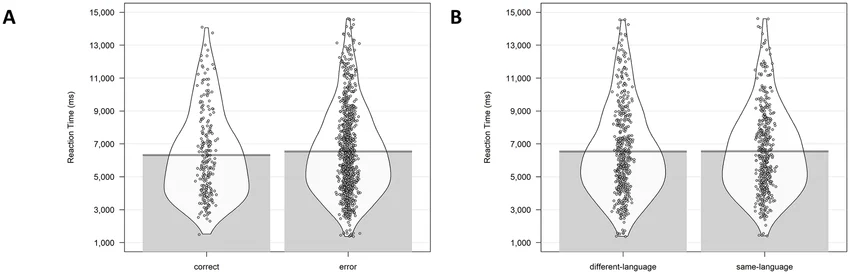
Speech Reaction Time Analysis
Subjects were instructed to rapidly produce syllables.
after hearing an auditory signal. This task measured:
- Phonation initiation time
- Articulatory coordination speed
- Motor preparation efficiency
Reaction time differences between simple phonation and more complex articulatory gestures were analyzed using spectrographic acoustic measurements.
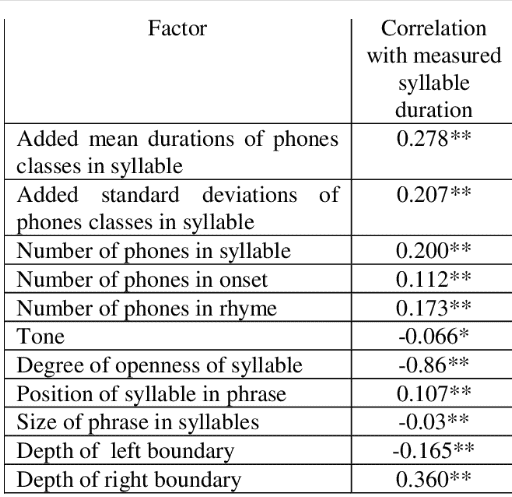
Syllable Duration Measurements
Participants produced words embedded within sentences to evaluate syllable timing control. Researchers analyzed:
- Monosyllabic word duration
- Compound noun timing
- Stress-dependent syllable shortening
- Duration adjustments across linguistic contexts
This task assessed the ability to modify speech timing according to prosodic and linguistic demands.
Sentence Duration and Speech Rate Control
Subjects repeated sentences at both normal and accelerated speaking rates. Researchers measured:
- Total sentence duration
- Phrase duration
- Pause intervals
- Temporal shortening capacity
The ability to increase speaking speed while maintaining temporal organization was a major focus of the analysis.Pause Duration Analysis
Pause timing between sentence phrases was evaluated to determine how effectively subjects could reduce pauses during fast speech production.
Syllable Repetition Task
Participants repeatedly produced the syllable /pa/ as rapidly as possible over several seconds. This task evaluated:
- Repetition speed
- Rhythmic consistency
- Rate maintenance over time
- Fatigue-related slowing
Major Findings
Speech Initiation Was Relatively Preserved
Neither Parkinson’s disease nor Huntington’s disease patients showed major impairments in simple speech reaction time tasks compared with healthy controls. This finding suggests that basic speech initiation mechanisms remain relatively intact in basal ganglia disorders.
However, greater variability in initiation timing was observed among some patients, indicating less stable motor control.
Parkinson’s Disease Speech Characteristics
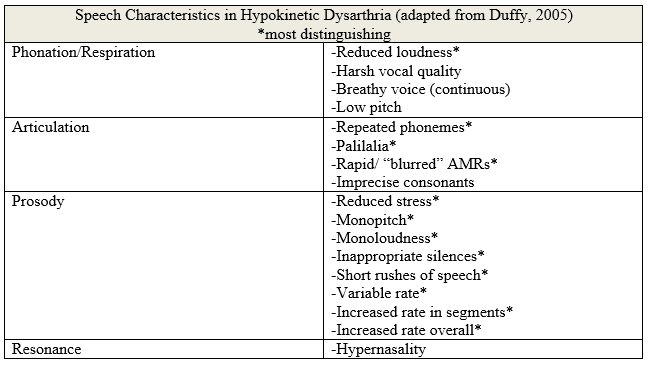
Patients with Parkinson’s disease demonstrated several important abnormalities:
Impaired Sentence Timing Flexibility
The most significant deficit involved reduced ability to modify sentence duration between normal and fast speaking conditions. Patients struggled to appropriately shorten longer speech sequences.
Reduced Temporal Adaptation
Parkinsonian speakers showed difficulty adjusting phrase timing and speech movement duration during connected speech production.
Preserved Repetition Speed
Despite clinical impressions of accelerated speech, objective measurements revealed that syllable repetition rates were generally not faster than normal.
Possible Motor Planning Deficits
Researchers proposed that Parkinson’s disease primarily affects complex speech motor planning involving long speech sequences rather than isolated syllables.
Difficulties became especially apparent during tasks requiring timing adjustments across multiple syllables and phrases.
Preservation of Global Speech Organization
Although timing flexibility was impaired, Parkinson’s disease patients maintained relatively normal proportional relationships between words, phrases, and sentences. This suggests that overall temporal speech organization remains partially preserved.
Huntington’s Disease Speech Characteristics
Speech impairments were more severe and widespread in Huntington’s disease patients.
Slower Sentence Production
Patients produced significantly longer sentence durations, especially during fast speaking tasks.
Reduced Speech Rate Modulation
Huntington’s disease patients showed major difficulty increasing speaking speed and reducing speech duration.
Prolonged Pause Durations
Unlike healthy controls and Parkinson’s disease patients, Huntington’s disease subjects failed to effectively eliminate pauses between phrases during rapid speech.
Impaired Syllable Repetition
Syllable repetition rates were significantly slower, indicating reduced motor execution speed.
Deficient Timing Control
The study suggested that Huntington’s disease primarily affects control of speech movement timing and execution rather than speech planning or initiation.
Neural Mechanisms of Speech Timing
The findings support the hypothesis that different neural systems independently regulate:
- Speech initiation
- Speech execution
- Rhythmic pacing
- Duration control
- Motor timing adaptation
The basal ganglia appear particularly important for regulating the speed and temporal adjustment of speech movements during continuous speech execution.
The study also highlighted the potential role of the caudate nucleus in controlling learned speech motor sequences, especially in Huntington’s disease where caudate degeneration is a hallmark neuropathological feature.
Clinical Significance
Understanding speech timing abnormalities in Parkinson’s disease and Huntington’s disease is clinically important for:
- Early neurological diagnosis
- Speech pathology assessment
- Motor speech therapy development
- Acoustic biomarker research
- Neurodegenerative disease monitoring
The results indicate that speech timing analysis may serve as a sensitive tool for evaluating basal ganglia dysfunction and disease progression.
Speech therapy interventions targeting rhythmic pacing, temporal regulation, articulatory precision, and speech rate control may help improve communication abilities in affected patients.
Conclusion
This study demonstrated that Parkinson’s disease and Huntington’s disease produce distinct patterns of speech timing impairment due to dysfunction within basal ganglia motor circuits. Although speech initiation remained relatively preserved, both disorders significantly affected the regulation and modification of speech movement timing during connected speech production.
Parkinson’s disease primarily impaired timing flexibility during longer speech sequences, suggesting abnormalities in speech motor execution and complex temporal coordination. Huntington’s disease produced broader deficits involving slowed speech production, impaired rhythmic control, prolonged pauses, and reduced syllable repetition speed.
Despite these impairments, overall proportional timing relationships within speech were largely preserved, indicating that higher-level temporal organization mechanisms remain partially intact.
These findings provide important insights into the neurological control of speech timing and emphasize the critical role of basal ganglia structures in speech motor regulation, rhythmic coordination, and fluent verbal communication.
